 ARCHITECTURAL METALWORK
Manufacturing
Why Full Trial Assembly Matters in Custom Metalwork
The objective is to inspect custom metalwork in the most complete and meaningful condition possible before it leaves the factory.
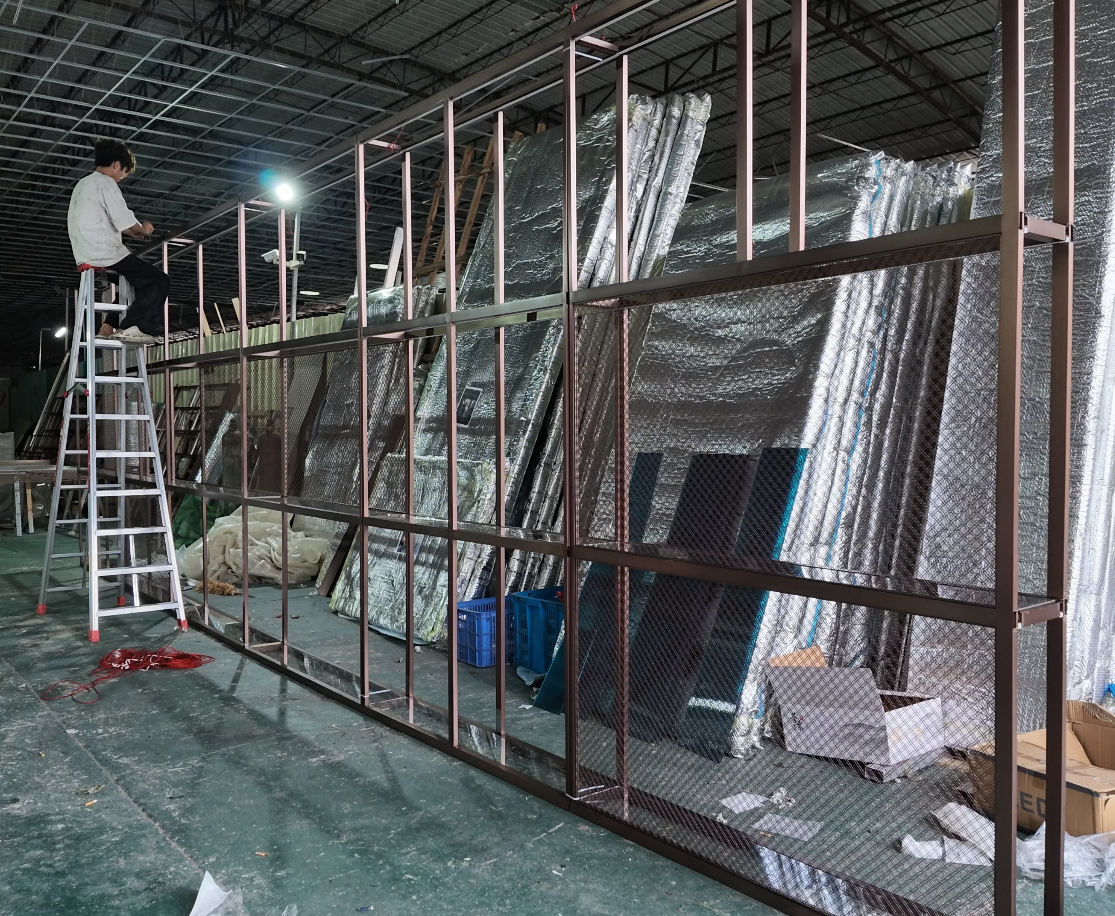
A custom metalwork assembly can be dimensionally correct at component level and still create problems when the complete product comes together.
Connections may not align as expected. Glass or acrylic inserts may require adjustment. Access to lighting components and wiring can become restricted. Visible gaps may appear between modules. Large assemblies may also need to be divided differently once transport routes and site access are considered.
For custom products that will be delivered in sections and reassembled on site, full trial assembly brings those components together at the factory before packing. It allows fit, alignment, material interfaces and function to be reviewed as a complete system rather than only as separate parts.
Not every custom product requires a separate trial-assembly stage. Some products are fabricated, welded and completed as a single integrated unit, with glass, lighting or other components installed before final inspection. In those cases, the finished product is inspected as a complete unit before packing and delivery.
The objective is not to trial-assemble a product simply for the sake of adding another production step. The objective is to inspect custom metalwork in the most complete condition possible before it leaves the factory.
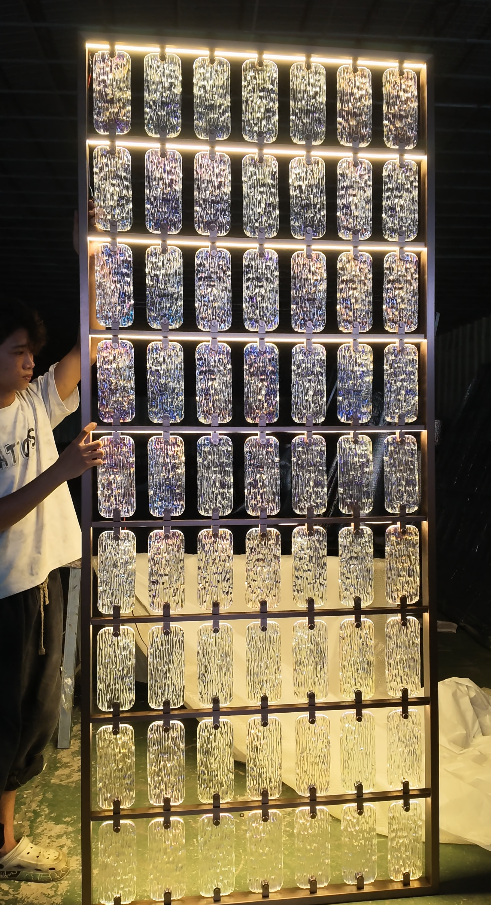
What does full trial assembly mean?
Full trial assembly is used for products that must be delivered in sections and reassembled on site. It brings the modules and their interfaces together so their fit and relationships can be checked before packing.
For screens, partitions, display features and other architectural metalwork, this means assembling the product in its intended assembled configuration before it is separated for delivery.
Depending on the project, the assembly may include stainless-steel frames, connected modules, glass or acrylic inserts, lighting components, removable parts, fittings and project-specific accessories.
For larger products, the completed assembly may later be separated into transportable modules. Bringing those modules together first allows their overall relationship to be checked before they are dismantled for packing.
Why checking individual components is not enough
Individual parts can meet their specified dimensions while small variations become more noticeable once several components are joined together.
This matters particularly in architectural metalwork, where the completed product is often visually read as one continuous element.
A connection that appears correct on an individual component may create a visible offset when two modules meet. A glass insert may fit its own opening but reveal an inconsistent gap across a larger assembly. Lighting access that seems straightforward during fabrication may become restricted once surrounding components are installed.
Many of these conditions are easier to identify and correct at the factory than after the shipment has reached the project site.
What is checked during trial assembly?
The exact inspection depends on the product and project requirements. Checks during full trial assembly can include:
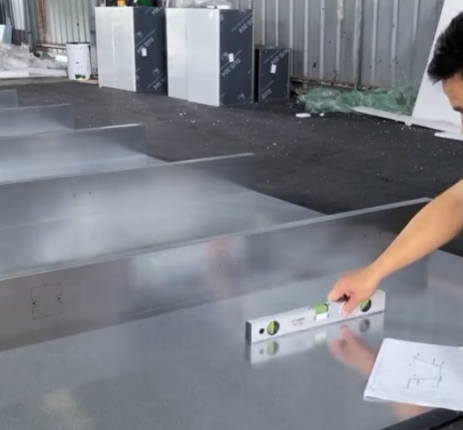
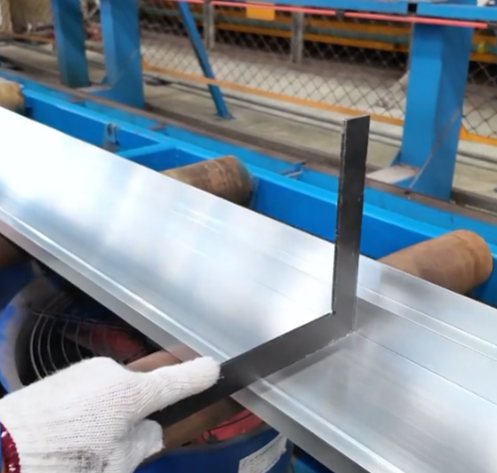
- Overall dimensions, geometry and diagonal measurements.
- Horizontal and vertical alignment, module-to-module relationships, connection details, welds and joints.
- Visible finishes and the fit of glass or acrylic.
- Lighting function and cable access.
- Accessories, component quantities, identification and numbering.
The purpose is to review the assembly as a whole.
Where stainless steel is combined with glass or acrylic, the fit between materials can be checked in its actual assembled condition. Where lighting is integrated, components can be installed and tested before packing. Where several modules connect together, alignment and connection points can be reviewed at full scale.
Trial assembly also helps determine how the completed product should later be separated, identified, protected and packed.
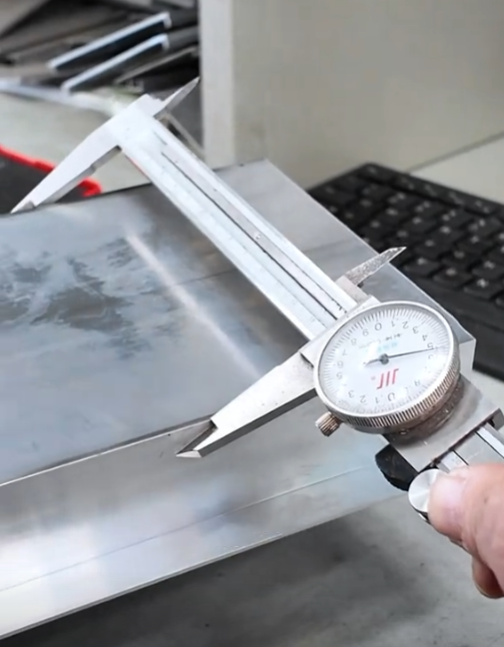
Mixed materials need to work as one finished product
Custom metalwork is often more than metal alone.
A partition may combine stainless steel with tempered glass. A display feature may include acrylic and integrated lighting. Another project may require several materials to meet at a highly visible junction.
These components are produced through different processes, but they still need to function and appear as one finished assembly.
Trial assembly allows the factory to review whether glass or acrylic sits correctly within the metal structure, whether visible gaps are consistent, whether removable components remain accessible, whether lighting and wiring can be reached when required, and whether finished surfaces can be protected during subsequent handling.
For products that are manufactured directly as a complete integrated unit rather than as separate modules, these same relationships are checked during final inspection in the finished condition.
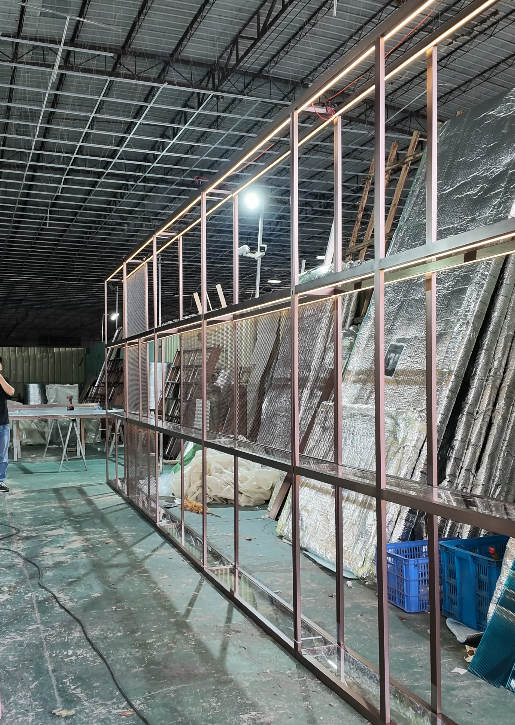
Large custom metalwork also needs to fit the route to site
A product being manufacturable does not automatically mean it can be transported into its final position as one complete piece.
Elevator dimensions, door openings, corridors, floor access and lifting conditions can all affect how an assembly should be divided.
These conditions are best considered before fabrication is complete.
On a restaurant partition project in Foshan, two of the largest screens were originally intended as complete units. Their finished size meant they could not be transported to the installation floor inside the elevator car.
The units were therefore fabricated in sections and fully trial assembled at the factory. At the project site, the sections were crane-lifted from ground level to the required floor, rejoined and installed.
The project illustrates why module planning is not only a shipping question. It can affect fabrication, connection details, trial assembly and the final installation sequence.
Trial assembly supports the installation team
For overseas projects, installation is normally carried out by the client’s local team rather than by FABRITERA personnel on site.
Preparation before shipment therefore becomes especially important.
Where a product is divided into modules, trial assembly helps confirm how those modules relate to one another before they are separated again for transport. Identification and numbering can then help the installation team understand which components belong together and in what sequence.
Depending on the project, this preparation may also be supported by connection details, installation drawings or other project-specific information.
Trial assembly cannot reproduce every condition that may exist on site, and it does not replace accurate site information. Its role is to confirm the manufactured assembly itself before the project moves to packing, delivery and installation.
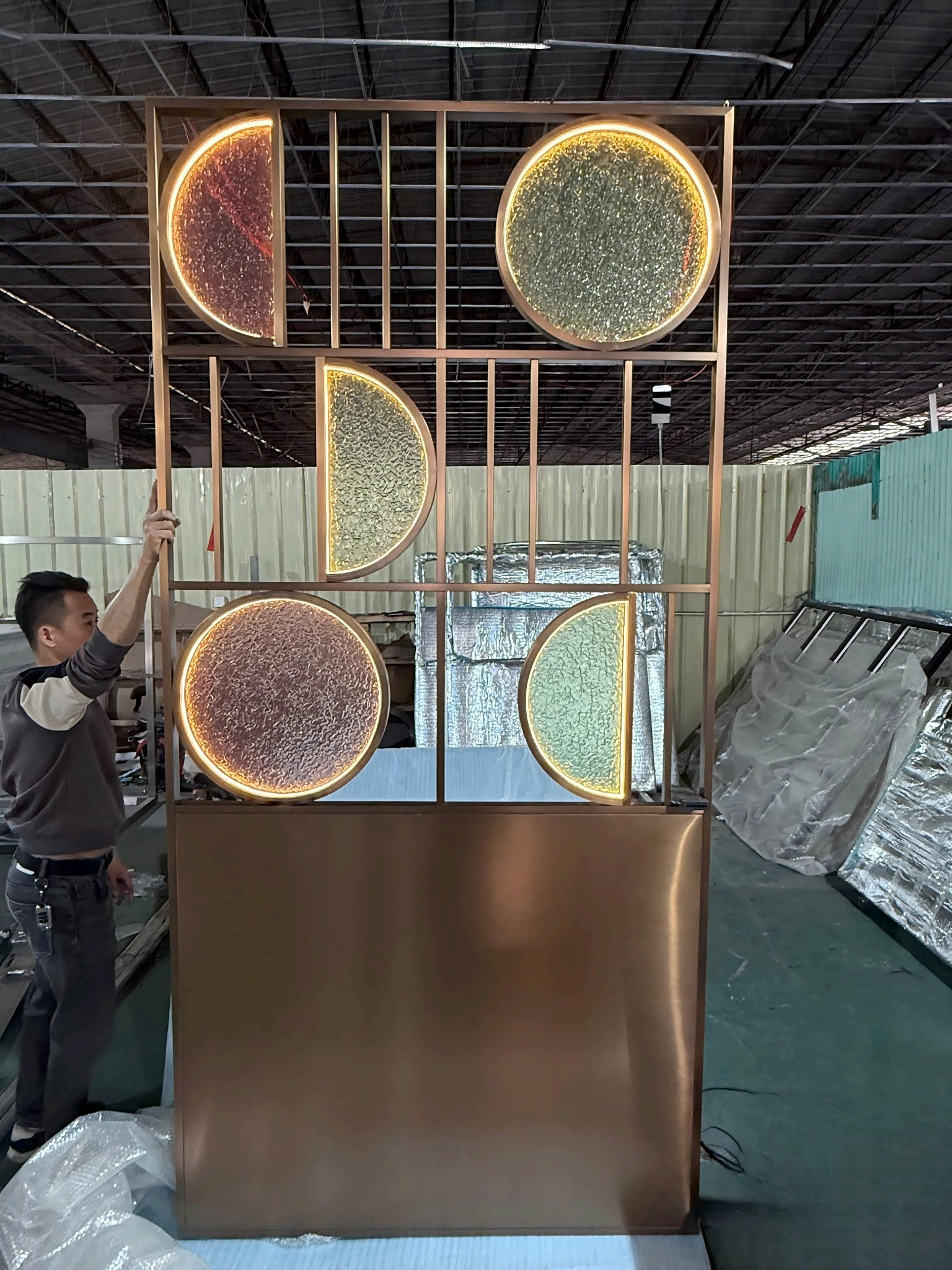

The same custom partition series during factory trial assembly and after site installation.
What happens after trial assembly?
After inspection, any necessary adjustments are made and the affected areas are rechecked. Once the assembly has passed these checks, it can be prepared for delivery.
- Trial assembly
- inspection
- adjustment where required
- recheck after adjustments
- identification and numbering
- controlled disassembly
- surface protection
- packing
- loading
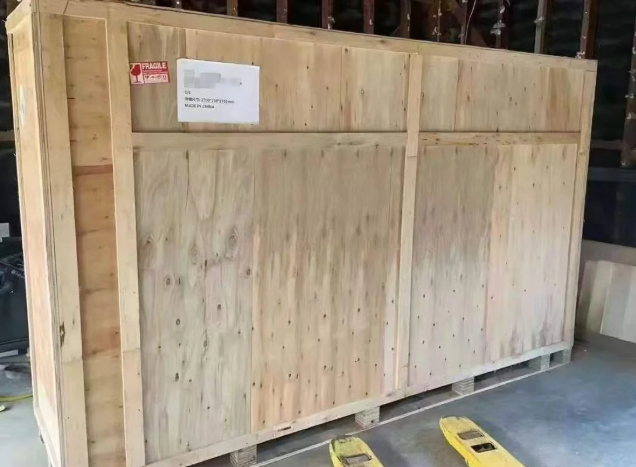
Packing is then planned around the actual product.
Finished stainless-steel surfaces, glass, acrylic, lighting components and projecting elements may all require different forms of protection. For modular assemblies, the packing sequence can also be coordinated with component identification and the intended installation sequence.
Products that are already completed as a single integrated unit follow a simpler route: final inspection in the finished condition, surface protection, packing and delivery preparation.
When is full trial assembly required?
Sectional products need to be checked in their assembled configuration before delivery. Curved or irregular geometry, concealed connections, glass or acrylic interfaces and integrated lighting can make those checks particularly important. These features do not, by themselves, mean a complete finished unit needs an additional trial-assembly stage.
At FABRITERA, products that must be shipped in sections and reassembled on site are fully trial assembled before packing.
Products that are fabricated and completed as a single integrated unit are instead inspected in their finished condition before shipment.
The inspection method changes according to the product, but the objective remains the same: review the manufactured work in the most complete and meaningful condition possible before it leaves the factory.
Trial assembly is part of manufacturing, not a substitute for site planning
Full trial assembly can identify issues with fit, geometry, material interfaces and function before delivery, but it cannot compensate for incomplete or inaccurate project information.
Site dimensions, access routes, surrounding finishes, fixing conditions and installation requirements still need to be considered as early as possible.
The strongest manufacturing outcome comes when fabrication, inspection, assembly, packing and site installation planning are treated as connected stages rather than isolated tasks.